
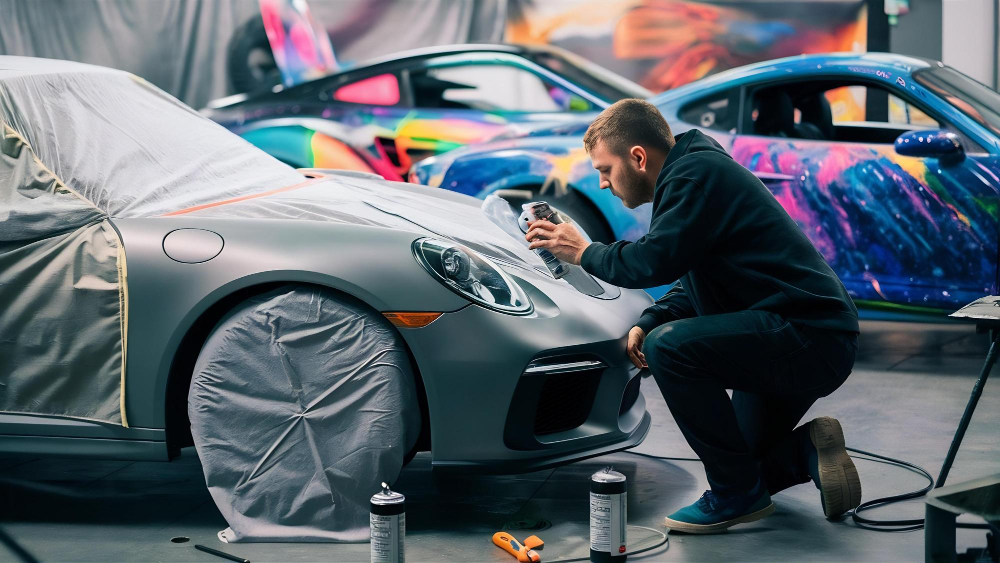
A touch-up fixes small paint damage in specific areas, while a full car repaint restores the entire vehicle for a uniform finish. Both serve different purposes, and choosing the right one depends on the condition of your car and the result you expect.
Car paint damage is not always as simple as it looks. Some scratches and chips can be handled with quick repairs, while others require a complete repaint to maintain consistency and protect the surface. Understanding when to choose each option helps you avoid unnecessary costs and ensures your car looks well-maintained.
Let’s take a closer look at how these options work and which one is the right choice for your situation.
What Is Car Paint Touch-Up and When Does It Work Best?
A paint touch-up is a targeted repair method used to fix small areas of damage without repainting the entire panel or vehicle. It is commonly used for minor imperfections that do not affect large sections of the car.
Touch-ups work best in situations such as:
- Small scratches that do not go deep into the metal
- Paint chips caused by stones or debris
- Minor scuffs around door handles or bumpers
- Isolated spots where the paint has worn slightly
This method focuses only on the damaged area, blending new paint with the existing finish. When done professionally, it can significantly improve appearance without the cost of a full repaint.
Understanding Full Car Repaint and When It Becomes Necessary
A full car repaint involves sanding, preparing, and repainting the entire vehicle or large sections of it. This option is used when damage is extensive or when the original paint has significantly deteriorated.
A full repaint is usually the better choice when:
- Paint is faded or oxidized across multiple panels
- There are deep scratches exposing metal
- Rust has started forming in several areas
- Previous paint jobs are uneven or peeling
- You want to change the color of your vehicle
This process restores a uniform finish and gives your car a completely refreshed appearance.
When to Choose Touch-Up vs Full Car Repaint
| Situation | Choose Touch-Up Paint | Choose Full Car Repaint |
| Type of Damage | Small scratches, chips, or minor scuffs | Widespread damage across multiple panels |
| Paint Condition | Mostly intact and in good shape | Faded, peeling, or uneven paint |
| Depth of Damage | Surface-level marks only | Deep scratches exposing metal or rust |
| Budget | Lower budget, looking for cost-effective fix | Higher budget for complete restoration |
| Time Availability | Need a quick repair | Can allow several days for full process |
| Desired Finish | Improvement in specific areas | Smooth, uniform, like-new finish |
| Long-Term Value | Short-term visual improvement | Long-term protection and value enhancement |
Common Situations Where Touch-Up Paint Is Enough
Touch-up paint works well when the damage is minor and localized. Typical cases include:
-
Small rock chips on the hood or bumper
These tiny imperfections are easy to cover with touch-up paint, preventing rust from forming.
-
Light scratches from parking or daily use
Superficial marks that only affect the top layer of paint can be quickly repaired without a full repaint.
-
Minor paint damage on door edges
Edges often get chipped from opening doors against walls or objects; touch-up fixes these small areas efficiently.
-
Small isolated areas of wear
Spots that have minor scuffs or discoloration can be corrected with touch-up for a uniform appearance.
In these situations, touch-up paint provides a fast, cost-effective solution while keeping your vehicle looking well-maintained.
When a Full Car Repaint Is the Smarter Choice
A full repaint is necessary when damage is widespread or affects the overall look and protection of your car:
-
Multiple scratches across different panels
When several sections of your vehicle are affected, touch-up may not blend seamlessly.
-
Fading caused by sun exposure
Prolonged sun damage can cause uneven paint tone, which is best corrected with a complete repaint.
-
Paint peeling or cracking
Peeling paint exposes the underlying surface and can worsen if not fully addressed.
-
Visible color mismatch from previous repairs
Inconsistent paint from prior work often requires repainting for uniformity.
-
Rust or corrosion affecting the paint surface
Touch-ups cannot fix rust, so a full repaint is essential to restore protection.
Choosing a full repaint in these cases ensures a consistent finish and protects your car’s body for years to come.
Mistakes to Avoid When Choosing Between Touch-Up and Repaint
Making the wrong choice can lead to visible imperfections, additional costs, and long-term damage. Avoid these pitfalls:
- Choosing touch-up for large or deep damage: Small fixes won’t cover extensive scratches or faded panels effectively.
- Ignoring early signs of paint deterioration: Delaying repairs can result in rust, fading, or further peeling.
- Focusing only on cost instead of long-term results: Saving money upfront can lead to higher expenses later if the repair fails.
- Attempting DIY repairs without proper tools or experience: Improper application can make imperfections more noticeable.
- Delaying repairs until damage spreads further: Early intervention is always more cost-effective and preserves your car’s value.
By understanding these common mistakes, you can choose the right approach and maintain both the appearance and protection of your vehicle.
Why Professional Paint Repair Makes a Difference
Whether you opt for a touch-up or a full car repaint, professional services deliver superior results and long-lasting protection:
- Accurate color matching: Ensures a seamless blend with your existing paint for a flawless finish.
- Proper surface preparation: Creates a durable base that enhances adhesion and prevents future issues.
- High-quality materials and techniques: Professionals use premium paints and tools to guarantee consistent results.
- Long-lasting finish: Reduces the likelihood of defects, peeling, or fading over time.
At Spartan Collision, we specialize in both touch-up repairs and full car repaint services. Our skilled team focuses on precision, quality, and restoring your vehicle’s appearance to the highest standard. Contact our experts today to determine the best solution for your car and ensure it looks its best for years to come.
Conclusion
Deciding between touch-up and a full car repaint depends on the extent of the damage, your desired finish, and your budget. Minor scratches and chips can often be resolved with touch-up paint, while larger or more visible issues require a full repaint for uniformity and protection.
Whether it’s minor scratches or a full repaint, Spartan Collision has the expertise to make your vehicle look like new. Don’t wait for damage to worsen, book your professional car paint service today and protect your investment. Contact Spartan Collision now to schedule your expert evaluation and get a free quote!
FAQs
1. What is the difference between touch-up paint and a full car repaint?
Touch-up paint is designed to fix small chips, scratches, or isolated areas without repainting the entire panel. A full car repaint involves sanding, priming, and painting multiple panels or the entire vehicle to restore uniform color and finish. Choosing the right option depends on damage size, vehicle age, and desired appearance.
2. How do I know if my car needs a full repaint?
A full repaint is recommended if damage affects multiple panels, includes fading, peeling, or rust, or shows noticeable color mismatch from previous repairs. Vehicles with widespread sun damage or age-related paint deterioration also benefit from a complete repaint to ensure a consistent and protected finish.
3. Is touch-up paint effective for minor scratches?
Yes, touch-up paint effectively restores small scratches, chips, or scuffs without the expense of a full repaint. Proper application ensures the repair blends with the surrounding paint, prevents rust, and maintains the vehicle’s appearance when performed by professionals.
4. How much does touch-up paint cost compared to a full repaint?
Touch-up paint is a cost-effective solution for minor damage, often priced per panel or repair site. A full repaint is a larger investment, covering multiple panels or the entire car, but provides long-lasting protection and a flawless uniform look, adding value to your vehicle.
5. Can DIY touch-up repairs match professional results?
DIY touch-ups can temporarily cover minor chips, but professional repairs ensure accurate color matching, smooth application, and durable finish. Experts also prepare the surface correctly, reducing the risk of peeling, uneven color, or future paint issues.